Sunday, March 31, 2013

Mary, Mary, Quite Contrary, How Does Your Garden Grow?


I've been working very hard lately to keep lots of little plant lives alive! I've never really had much of a green thumb, but so far, there's only been one casualty (sorry dill). Since I stopped working nights and had a little more time on my hands, I really wanted to start growing some of my own produce. I especially wanted to have an herb garden. Fresh herbs can be expensive to buy, but they are such a great addition to so many dishes and I love cooking with them. So I decided growing them would be really awesome. 

I also wanted to make my garden portable since I'll be moving in a few months. So I got some window boxes to plant my lettuce and herbs, some big barrels to plant my peppers and zucchini, a little pot for my aloe vera, a dish for some wheatgrass, and some hanging baskets for tomatoes and lavender. I went a little crazy and planted a lot of stuff so I'll need to thin out the little window boxes when the plants get bigger, but for right now they're fine.

I've been so excited to take on this project and grow my little garden. It's fun to see the seeds sprout their little green leaves and then turn into real plants! My herbs are getting really full and I can use them in my cooking now. My lettuce leaves are still too tiny to use, but hopefully they will grow big and strong soon. It's actually been a pretty relaxing and therapeutic process. It takes patience, which I generally have very little of, but it's really fun to watch. I did a lot of research and found that you can grow a lot of things by container gardening, so once I get the hang of it, I want to grow carrots and onions and all kinds of stuff, but that will probably have to wait for San Diego.

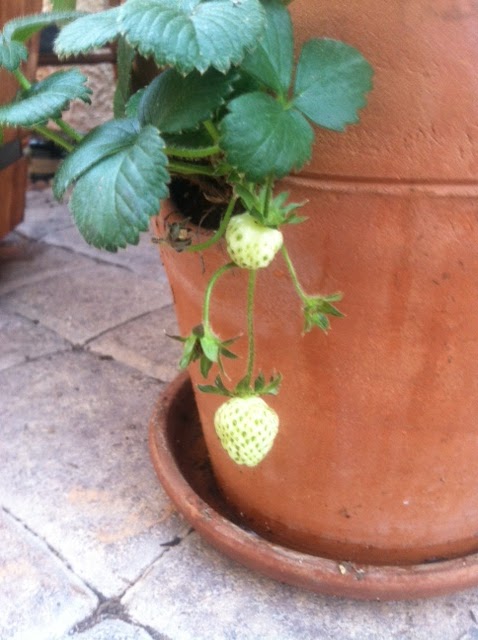
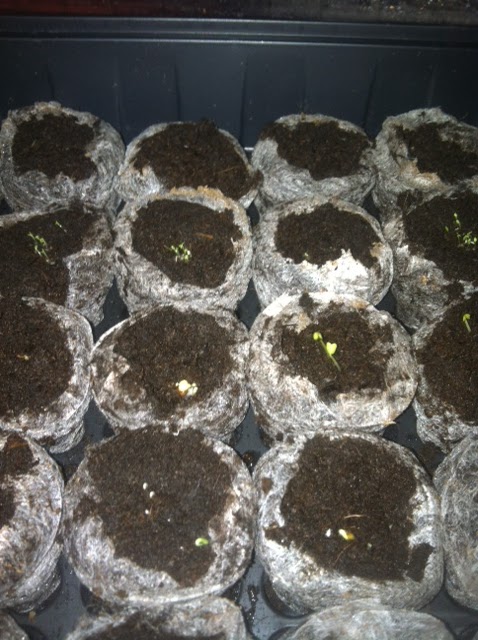
Here's what I did for my portable little garden. I ended up planting oregano, sweet basil, Thai basil, mint, rosemary, thyme, lemon balm, chives, cilantro, parsley, six varieties of lettuce and greens, chamomile, lavender, quinoa, zucchini, jalepenos, bell peppers, grape and roma tomatoes, aloe vera, wheatgrass, and strawberries! I bought some of the herbs as plants and some as organic heirloom seeds. The lettuce I bought all as organic seeds. The tomatoes, peppers strawberries, and aloe I bought as plants that just needed to be potted.  I also bought a lot of organic potting soil and some organic peet pods to sprout my seeds. Those were basically in a tray of 72 little pods of soil that you put the seeds in until they sprout.


I decided the arrangement that I wanted to plant everything in, and got started. For the plants, I just potted them in their various containers, but the seeds took a little more work. For everything except the wheat grass, I had to read the labels and do a little research and figure out the best way to get them to sprout. Some required soaking for different periods of time, they all required a different number of seeds per pod, and different watering schedules so I had to keep track of which seeds were where and what they all needed. After a few days, I saw little peaks of green poking through the soil. Once the sprouts were big enough, I transported those to the window boxes as well. I kept them inside until they grew a little stronger, then I moved them outside. For the wheatgrass, I just filled its container with soil and sprinkled the seeds over top, then a little more soil. Within days, the grass started growing, and now it's about 8 inches tall, and I juice it into my morning juice!!



Now that I have a robust little herb garden, I can use it in my recipes! Here's one that I can't stop eating lately!

Quinoa Tabbouleh
1 cup quinoa, uncooked
2 cups water
1 cup fresh parsley, chopped
1/4 cup fresh mint, chopped
1 cup kale, chopped
1 cucumber, diced
1 roma tomato, diced
1 green onion, chopped
2 cloves garlic, minced
juice and zest of 1 lemon
2 tbsp olive oil
salt and pepper

Add the quinoa and water to a saucepan. Cover and bring to a boil, then turn the heat down to a simmer. Cook for about 12-15 minutes until all the water has been absorbed. Let this stand, covered, while you prepare the remaining ingredients. Mix everything into a big bowl, and it's ready to eat! Refrigerate the leftovers (if you don't eat it all!). It gets even more delicious the longer it sits so it's really yummy the next day. It's not traditionally made with quinoa or kale, but quinoa cooks really fast so I use it for everything, and I had kale in my fridge that needed to be used so there you go. That's what is great about this salad, you can add whatever you like or have on hand.

I hope you enjoy and I've inspired you to maybe grow a little herb garden yourself. You don't have to go all crazy and grow as much as I did, but you can even bring a little green into your life and grow some herbs on your countertop! Good luck green-thumbed friends :)

Tuesday, March 5, 2013

Diet of the Day

I'm going to start this post with a warning: I am not a nutritionist, a dietician, or a doctor (yet!!). I'm just a little self-educated blogger. This post is purely my opinion from personal research and experience so take it with a grain of salt. :)

"To eat is a necessity, but to eat intelligently is an art." - La Rochefoucald

It seems like every day, there's a new fad diet. From paleo diets, to low carb diets, to gluten-free, to raw food, to South Beach diet, to the Mediterranean diet, there are so many conflicting opinions on which diet is best for us. So I'm here to break it down and tell you the basics, as well as the pros and cons, to some of these diets that we've been hearing so much about.

Paleo Diet
Overview: This is a fairly new craze that focuses on eating lean cuts of unprocessed meats, vegetables, and fruits, and limits grains, dairy, sugar, salt, oils, and processed foods. It has a relatively low percentage of calories coming from carbohydrates because of the limitations on grains and sugar.
Theory: Since our bodies haven't changed too much in the past million years or so, supporters of this diet suggest that we eat food that we would have eaten a million years or so ago. Basically it's a caveman diet with food that we would have eaten before the development of agriculture.
Pros: I love that this is a diet that focuses on whole, natural, unprocessed foods and limits unhealthy sugars, oils and processed foods. I also like that while the diet is naturally low in carbohydrates, it doesn't completely restrict them, or completely restrict any particular macromolecule. It has a little more freedom in what you can eat than some of the other diets you'll see below.
Cons: I don't love that it is a diet with it's focus on animal protein. Animal protein can be high in saturated fat and is acidifying and hard to digest for the body.

Gluten-Free Diet

Overview: Gluten is a protein that is naturally occurring in wheat, barley and rye (and products containing these grains like bread, pasta, and baked goods). This diet basically eliminates those foods.
Theory: People with celiac disease cannot digest wheat, and some people have sensitivities to gluten even if they don't have celiac disease. Supporters of this diet also claim that wheat is an inflammatory and that most people can't digest wheat fully. They also say it can cause toxins to leak out of your digestive system and into your bloodstream.
Pros: If you have a sensitivity to wheat, this can really help you and make you feel much better, clearing up your skin, relieving stomach issues, and reducing asthma symptoms. 
Cons: Many gluten-free substitute products are now being marketed to keep up with this diet craze, but without whole grains, a lot of these foods are nutritionally deficient and can have more calories and fat with less fiber and vitamins. 

Raw-Food Diet
Overview: This diet is basically what it says. You eat raw food. Nothing is cooked over 115 degrees. Most followers are vegan, however some eat raw unpasteurized dairy products and fish. 
Theory: The theory is that essential enzymes are destroyed by the cooking process, and by eating raw food, you are eating food that is more "alive" and healthy. 
Pros: This type of diet focuses on lots of fruit and veggies and nuts and lots of good stuff. It naturally cuts down on calories and fat.
Cons: There is a TON of prep work and special equipment needed for this type of diet. Also, some nutrients are better absorbed when they're cooked, like lycopene in tomatoes, for example. And I like soup. And cold, raw soup just doesn't appeal. But you know, that's a personal thing. Maybe some people like cold soup. 

Atkins and Other Low Carb Diets
Overview: These low carb diets were very popular a few years ago. They involved limiting carbohydrates to almost none.  
Theory: When your body has extra carbs, it stores them as glycogen in your liver until you need them. When you need energy and you don't have any glycogen stores, your body breaks down fat to use as energy. One of the products of this break down is Acetyl-CoA. If you're still low on carbs this gets converted to ketone bodies in the liver to be used as fuel. This is known as ketosis. Developers of this diet claim that this can help you lose weight by burning fat. Eating less carbs also causes your insulin to not spike so your blood sugar is at a more constant level.
Pros: Initially this diet can help burn fat from your body. 
Cons: Fruits and vegetables are mainly carbs and cutting those out is never a good thing. This diet has more of an emphasis on protein, fats and processed foods, especially meat. Carbohydrates are the only fuel your brain can use. Cutting them down to such an extreme level can be dangerous. Ketosis is acidifying for your body and can be hard on your kidneys. Besides, carbs taste good. 

South Beach and Similar Diets
Overview: This is a less extreme version of the really low carb diets. This type of diet reduces, but doesn't completely eliminate carbs. It focuses on healthy fats and carbs with lower glycemic indexes (i.e. not super starchy or sugary foods). It allows healthy whole grains and unsaturated fats. 
Theory: Similar to the theory of Atkins.
Pros: This type of diet causes a person to see food items individually. Not just "carbs are good"/"carbs are bad," but instead "this kind of carb is healthy and this kind is less healthy."
Cons: These types of diets still criminalize one type of food, which are essential for a healthy diet. 

Mediterranean Diet
Overview: This is a diet that focuses on heart healthy fats, fruits and vegetables, red wine, seafood and whole grains. It suggests limiting sweets, meat, and processed foods. 
Theory: All the foods encouraged by this diet are foods foods that help keep your heart healthy. 
Pros: This type of diet makes you think about healthy foods in general and isn't complicated with what you can and can't eat. And any diet that tells me I need to drink more red wine is one I can get on board with. 
Cons: The only con I can think of is that you should watch which seafoods you choose because some can have high mercury levels and you want to make sure to keep those in check.

I have a previous post on vegan and macrobiotic diets if you want to check those out too. 

My ideal diet would be a kind-of-paleo, sort-of-raw, almost-vegan, nearly-macrobiotic, semi-Mediterranean,  one. There are aspects of all of these diets that I love, but I don't agree with any one in particular. I like the whole, natural approach of the paleo diet. I like the focus on fruits and veggies of the raw diet. I like the health benefits of the vegan diet. I like the balance of a macrobiotic diet. I like the focus on specific nutrients of the Mediterranean diet. I would like to have a diet that consists of vegan, natural, whole ingredients that are kept in their purest form to create a balance of the essential nutrients we need! Whew wouldn't that be awesome?! 

Food is a science to me. Perfecting a diet is difficult, and it's ok to not be perfect all the time. What is important is to keep the basic principles of nutrition in the forefront of your mind for most meals. You don't have to pick one of these diets and stick to it. You can make it your own and tailor it to your needs. And although achieving a perfect balance may be complicated, keep your food simple. The less processed it is, the better it is for you. Period. 

What's best for me may not be best for you, so if there is something you like from one of these diets, than incorporate that into your life. Experiment until you find a balance of nutrition that makes you feel good. Fueling your body with good stuff will improve your life in so many ways. Good luck everyone!! :)


Saturday, March 2, 2013

Frankenfoods

This post came by request for a description of these chemicals in our food that you hear about in health articles and on the news. If you have any requests for a post, or something you'd like to learn more about, let me know and I'll work on it!!

One of the main reasons I choose whole, natural foods over more processed foods is the amount of chemicals and ingredients that can be added to these products. Many ingredients that are allowed by the FDA have been proven to cause all kinds of health risks. To avoid these yucky chemicals, it's best to choose items that have less than six ingredients, all of which you can pronounce. Anything that sounds like it's been made in a lab, is probably not good for your body. To avoid buying any potentially dangerous products, I'm going to tell you about the scariest ones. I've already mentioned artificial sweeteners and partially hydrogenated oils (trans fats), and I don't want to be too repetitive, so see my previous posts for that.

Sodium Nitrate and Nitrite
These chemicals are added to meats to preserve color and prevent botulism. They are also found naturally in small amounts in fruits and vegetables. Nitrate easily converts to nitrite so they are basically the same thing once inside your body. The problem is the quantity in which they are added to our food. Since these compounds are naturally in our bodies and food, we can metabolize them and they are safe, however, at high levels, they can be toxic. High nitrite levels have been linked to respiratory diseases and migraines. The bigger problem is that when these chemicals are in an acidic or very hot environment, like your stomach or the fryer, they convert to nitrosamines, very powerful carcinogens. The most common place to find nitrates or nitrites is in cured meats like hot dogs, salami, pepperoni and bologna. Try to buy these products made without nitrates if you can.

High Fructose Corn Syrup
High fructose corn syrup, or corn sugar, as it is now being marketed, is corn syrup that has been processed to convert some of the glucose to fructose to make is sweeter. It is commonly used in a lot of processed foods mainly because of the cheap cost of production. The government subsidizes corn production, as well as taxes imported sugar, so that makes it more appealing to big companies. Nutritionally, HFCS and sugar are similar, however, HFCS consists of glucose molecules and fructose molecules, while cane and beet sugars contain sucrose which is a molecule of glucose and a molecule of fructose chemically bonded. Because HFCS is an unnatural, processed substance, our bodies process it differently. HFCS is harmful because it disrupts your body's natural appetite functions. It makes you crave more sweet foods and spikes your insulin production. All sweeteners have similar effects, but it is better to choose more natural options, or better yet, choose whole natural foods that are unsweetened and unprocessed.

Monosodium Glutamate
Monosodium glutamate, or MSG, is a salt of the amino acid glutamate. It is used in foods to create the "umami" flavor or as a flavor enhancer to other tastes. Many people are sensitive to MSG and can get headaches, tightness or pressure in the face, rapid heartbeats, numbness in the limbs, chest pain, or trigger asthma symptoms. It has also been linked to obesity. Avoid buying products with MSG or hydrolyzed yeast or vegetable protein, which contain MSG.

Artificial Coloring
Foods marketed to children have to be fun so kids will want to eat them. Companies use artificial colors and flavors to make these foods more appealing. Red 40 and Yellow 5 and 6 make up most of the food dyes that are used and have been linked to hyperactivity and ADHD in children. These are the most common artificial colors, but not the only dangerous ones. Blue 1 & 2 and Red 3 may also cause cancer. Many brands now use fruit juices to color their products so try to find those varieties and avoid these yucky chemicals.

Bisphenol A
Bisphenol A, or BPA, is a synthetic hormone often found in canned foods. Because of it's chemical structure it's used to make plastics. It has been banned in baby bottles and has been labeled a toxic substance. People are most sensitive to this chemical during development because it can bind to the same receptor as natural estrogen and mimic its effects. It can also affect your thyroid. Make sure food containers and canned food you buy are BPA free. Also, this chemical is naturally made when acid from tomatoes react with can linings, even if the cans are BPA free so try to buy tomatoes in jars or cartons. Phthalate are another group of similar chemicals that should also be avoided.

BHA, BHT and Propyl Gallate
These three chemicals have been shown to cause cancer and are used as a preservative to keep fats and oils from going rancid. These are used in butter, shortening, cereals, chewing gum, dehydrated potatoes and packaged baked goods. The same properties that make these chemicals good preservatives are the properties that make them bad for you. They are easily oxidated and can cause cancer. They are hard for your body to process and eliminate. So again, avoid products with these substances.

Moral of the story: Buy whole, unprocessed foods and avoid additives that you can't pronounce. If it sounds like it will give you cancer, it probably will.

Thursday, February 14, 2013

Homemade Kombucha!

I have shared my love for kombucha before, but I'll repeat myself. I LOOOOOOVE kombucha!!! It is so spectacular. It makes me feel great and it tastes so good!!! What I don't love is that it costs so much! It's tea! Why does it cost $4 a bottle?! So I did some research and figured out how I can make my own. And then I made it! And now I don't have to pay $4 a bottle and I have fresh, homemade kombucha in my fridge all the time!!

In case you haven't heard about the magical heavenly beverage, I'll give you a tiny little summary. Kombucha is a fermented tea. It is slightly, naturally carbonated and a little vinegary from the fermentation process. It is really detoxifying for your body and the natural bacteria in it are probiotics and good for your digestion. It contains glucaric acid that researchers have found can prevent and fight cancer.

So here's how I did it. It's a two-part process. The first part is growing the SCOBY and it takes about 6 weeks. The SCOBY is a Symbiotic Culture of Bacteria and Yeast. It is what ferments the sugar to create the unique flavor and benefits of kombucha. You can buy one online or get one from a friend (I'll have an extra every week for anyone that wants one!). The second part is just brewing the tea, and that just takes a week, so I have a new batch of about 8 bottles each week.

Growing the SCOBY:
This takes a long time, but it's not a hard process. It just takes a couple ingredients and a little equipment and a lot of patience.
You'll need:
6 green or black tea bags
1/3 cup regular sugar, don't use sugar substitutes, or any other sweeteners. This is what feeds the bacteria.
1 quart of filtered water
2 bottles unflavored kombucha
1 gallon glass jar
cheesecloth or paper towels
a rubber band

In a stainless steel pot, boil the water. Add the tea and let it steep for 15 minutes. With a wooden spoon, stir in the sugar and dissolve it. Let it cool to room temperature. Let the kombucha sit out so it can come to room temperature too. Make sure the jar is really clean. Pour the tea and the kombucha into the jar and cover the jar with the cheesecloth or paper towel and secure it with the rubber band. Let this sit in a warm, dark place for 5-7 weeks. When it's colder, it takes longer, but you should be able to see the SCOBY growing on the surface. When it's done, it will smell really vinegary. Make sure there's no mold or anything else growing on it. It looks like a white, rubbery disk when it's done.

Brewing the Kombucha:
After you have a SCOBY, you're ready to make the actual kombucha!!! This only takes about a week.
You'll need:
A SCOBY plus 2 cups of the liquid it grew in (starter liquid)
1 gallon filtered water
8 green or black tea bags (I used half of each)
1/2 cup sugar
Jar, cheesecloth, and rubberband

Boil the water in a stainless steel pot and add the tea bags. Steep for 15 minutes. Stir in the sugar with a wooden spoon. Let this cool to room temperature. Pour this into the jar. Pour in the starter liquid. With very clean hands, place the SCOBY in the jar. Cover with the cloth and the rubber band and let it sit in a warm, dark place for a week. Then you just pour the kombucha into glass bottles and refrigerate. I saved the bottles from the store bought kombucha and used those. If you want to flavor it, this is when you do that. I added some fresh grated ginger to mine. It made 8 bottles! Now I have some everyday!!

Each time you brew a batch of kombucha, a new baby SCOBY grows so you have 2 at the end. I'll have an extra to give away every week now, so if you want one just let me know!!

Saturday, January 19, 2013

Thinking About Teeny Tiny Bikinis

After months of cold weather, hot tea, sweaters, and fireplaces, January has us thinking about swimsuits. Not because it's warm enough to go for a swim, but because most of us, myself included, made a resolution to look better this summer. Most of my posts are about nutrition, but that's only half the battle of a healthy lifestyle. Exercising is a necessary part of looking good in those short shorts on the beach. If you've made a resolution to lose weight and work out more this year, that is awesome. It's always great to want to be a better version of yourself, but just wanting to work out isn't going to give you results. You have to come up with a plan and stick to it.

The first step is to come up with a long term goal. My goal is to lose 30ish pounds. I'm going to see how I feel after 25 and decide if I want to keep losing or just maintain. It sounds like a lot, but just 2 years ago that's the weight I was, and I was totally happy with it. It started creeping up more at the beginning of last year, after a few too many nights out drinking all night and eating nachos at 6 in the morning. I'm not too focused on the number on the scale, but more about how I look, feel and how my clothes fit. I can't wait to get back into my favorite jeans.

Make sure you know your body, and you pick a goal that is reasonable and attainable. Losing 50 pounds in a month is not realistic. Being 100 pounds and 6 feet tall is also not reasonable. Pick something that will keep you healthy. A reasonable number to think about is 2-3 pounds a week. Losing more than that is not sustainable and probably means that you're losing weight in an unhealthy way. Just keep that in mind when you're deciding your big goal.

The next step is to consider why you want to achieve this goal. What's your motivation? It has to be more than"I want to look like a Victoria's Secret model in my swim suit." You need to find a deep desire to want to achieve your goal, so that you'll stick to your plan. Mine is two-fold. This summer I'm going to Hawaii!! I don't want my pictures from that trip to piss me off and make me lose focus on my awesome trip. So, maybe looking like a swimsuit model would be ok. But my bigger, better source of motivation is you. Anyone who's reading. How can I possibly give you advice on leading healthy lifestyles if I'm not doing so myself? If I want this to be my career and my passion, I have to make sure that I am living it all the time. I would love to be inspiring and motivating to you, and I can only do that if I'm happy and healthy in my own life.

After you've picked your big, main finale goal and your reason for wanting to achieve it, you should think of a couple mini goals and a reward for achieving them. Since I wanted to lose 30 pounds, I thought I should break that up into 5 little mini goals of 6 pounds each. You could also choose fitness goals like how long you can run without stopping, how much you've increased the weight you're lifting, or how flexible you're getting from yoga and pilates!

The harder part than picking your mini goals, is coming up with a way to reward yourself. I think that if you know there's a little reward coming if you just push yourself a little more, you'll be more willing to want to do it. It's much easier to think about losing 6 pounds than 30. Or running for 15 minutes without stopping rather than running a marathon. So breaking it up gives you an attainable step towards your more daunting aspirations. I wanted my rewards to encourage my goal and not fight it. So instead of choosing a reward like getting to eat a boatload of nachos, I chose rewards that would encourage me to work out.

My first reward was a new workout outfit. New clothes would encourage me to want to go to the gym and show them off. I always get so excited by new clothes and want to wear them right away. My second reward was a new yoga mat. This is gross, but the one I take to hot yoga gets super sweaty, and I wanted another one to use at home or for regular yoga classes at the gym. Also, this way, I can keep my hot one in the car and my new one at home in my little home gym I set up in my bedroom. I've already accomplished these first two (yay!!!). My third reward is the one I'm working towards now. Variety is the spice of life, so I am going to treat myself to a new workout. I'm thinking I'm going to buy a Groupon I've been eyeing for some crossfit classes. My friend that helped me come up with this plan really wants to take Barre classes, the ballet inspired workout. If this is a reward you choose, make sure it's something that you'll really look forward to. The next reward is a snowboarding trip! I'm excited because I've only been once, and I really want to go again. The final treat for myself is a bicycle. I am DYING to have a bike. I want one soooooooo bad. I'll ride it everywhere, I promise. I've been wanting it for a year now, so this is great motivation when I feel like laying on the couch eating chips and salsa.

The next thing you should do is set yourself up for success. Write down your goals and put them up somewhere you'll look at them everyday. I keep mine on my closet door, right next to my mirror. Right next to it, I put the schedule for the classes at my gym and yoga studio. Plus, I pack my gym bag and take put it in my car everyday, so I always have workout clothes to take to the gym whenever I'm done with my daily errands. I also set up a little gym in my room, so I have to walk by it everyday, and it makes it really hard to ignore a workout. I put my new yoga mat, a pull-up bar, my hand weights and my resistance bands all set up, so not having time to exercise is never an excuse.

Here's a plan I came up with to make sure I actually achieve my goals. Since I have a gym membership, a hot yoga membership, a beautiful running path in my neighborhood, countless workout DVDs, and plenty of workout equipment at my house, there is no excuse for me to not get a workout in every single day. My usual run takes me between 20 and 30 minutes (depending on how hard I'm working) so on really busy days, even that would be a little step towards a big goal. I'm aiming for 2 workouts a day, one in the morning or afternoon and then usually heading to the gym after work. Ultimately, I would be really happy with 10 workouts a week. This means that most days I would need 2 a day, but sometimes, life happens and it's not possible so a quick workout would be fine, as long as that's the exception and not a regular occurrence.

I have so many different things I can do so I'm not getting bored doing the same thing. I'm also trying not to wear myself out by pairing my workouts accordingly and giving each muscle group a day to rest. Most days, I'll do yoga in the afternoon, and then some cardio and weights at the gym at night. Or maybe a little jog with the dog in the morning and the gym at night. Or P90X and hot pilates. The possibilities are endless.

Again, it's really important to know your body. I love doing yoga. I love how I feel after, and I love how flexible I've gotten, and I love that it's a mind and body workout, and I love the environment, BUT I know that my body responds better and looks better when I'm doing a little cardio (about 20-30 minutes a day) and lifting weights. So to look and feel my best, I know that I should do both. Since I really love yoga (did I mention that) and I'm acquiring a new found love for the gym, this really is attainable for me. I also know that workout DVDs, while convenient in a pinch, are not right for me. I need accountability. I need to walk into the gym and start working out. Mostly because after you start working out for 10 minutes, it's a real bitch move to leave after that. But it's so easy to turn the TV off 10 minutes into a workout DVD.

Which brings me to my last thing! (Whoo finally, I know this has been a long one.) A sure fire way to stick to your goals and your plan, is to have some kind of accountability. Tell anyone who will listen and care about what you're going to do. Post it here, tell me, I'll listen! :) Tell your friends, or better yet, find a friend that wants to do it with you. Surrounding yourself with people who will motivate, and not criticize, is a huge help. If that doesn't work, there's an App for that. I use MyFitnessPal on my phone. You can track your workouts, your weight and your meals to keep yourself on track. It even sends you reminders to track it and gives you some feedback. I also get health tips sent to my phone. Telling people about my goals is really what works for me. I'm less likely to slip if I know people that people are encouraging me.

Hopefully this helps you all stay on track for your New Year's Resolutions. We'll all be looking much better on the beach this summer! Feel free to use this page to post your plans to get into shape and share your tips here. Everyone, including me, can benefit from other people's points of view. And always feel free to email me with any questions or comments at naturallyhealthyplease@yahoo.com Thanks everyone!!

Tuesday, January 15, 2013

Sleeping to Dream

Not only does this post share a name with my absolute favorite Jason Mraz song, but it talks about one of my favorite activities. Sleep! I love to sleep. I'll be the first to admit that between work, social activities, working out, and life in general, I don't get as much sleep as I should. My work schedule is split so I have just enough time to get my 8 hours, but I've been going to the gym at odd hours lately (2 or 3 am, weird!) so by the time I get home and get into bed, I really only have time for 6 hours or so. I try to make up for it by ensuring that those 6 hours are quality sleep time. Working out a lot has helped by tiring me out so by the time I crawl under the covers, I'm exhausted. I also make sure there's nothing in my room to distract me, like the tv or the phone. Ending the night with a little ritual helps too. It gets your body into a routine and signals that it's bed time. A little afternoon nap helps me out too. :)

Getting enough sleep can help improve your memory, reduce inflammation, increase your attention span, lower stress, lose weight and even help you live longer! Plus, we all look a little ragged when we haven't slept properly. They don't call it beauty sleep for no reason! When you sleep, your body produces more skin, making you look healthier. Growth hormone also increases in activity while you sleep, building muscle and shaping our bodies. And really, everyone looks better without bags under their eyes.

There's a good reason sleeping in makes us so happy. Sleep is your body's time to repair itself and fix all the damage that we've done all day long. When you get enough sleep, your body's hormones are more balanced, your memory is improved, and you are able to think more clearly. Most of us have seen the effects of staying up too late and not feeling our best the next morning. It feels so much better to wake up feeling rested.

During flu season especially, it's important that you get enough sleep. There are many different kinds of cells that are involved in your immune system, and basically when you don't sleep enough, the number of these cells changes and it's easier for you to get sick. Also when we get sick, our bodies try to fight off whatever is making us feel like crap. That's why we get fevers, to try to kill the viruses or bacteria that is making us sick. When you sleep, your body gets better at regulating your temperature and your fevers. There are also links to sleep deprivation and heart disease and cancer.

Here's how sleeping more can make us skinnier. When your body is sleep deprived, it goes into a state of stress. Stress hormones are released, like cortisol and norepinephrine. These hormones cause your metabolic system to temporarily be put on hold while you deal with a problem. Cortisol especially can cause energy from food to be stored as fat, especially around your tummy! There are a ton of chemicals that affect our very complicated metabolic process. Two more important hormones are ghrelin and leptin. Leptin is released by fat cells and suppresses our appetite and increases our metabolism. Ghrelin is released by the stomach and makes us hungry and causes energy to be stored. When we are sleep deprived, leptin levels decrease and ghrelin levels increase, making us hungrier and slowing down our metabolism. People who are lacking sleep also tend to crave carbohydrate heavy and sugary snacks. Plus the more hours you are awake, the more energy your body needs to keep moving, causing you to eat more. So the more you sleep, the more you keep the chemical balance in your body, and the healthier you will be.

The best way to make sure you're getting quality sleep is to go to bed and wake up at about the same time everyday. I know it's not really realistic to think you can do this every single day, but it really does help! Here's how I keep my bedtime and morning rituals so I can make the most of my sleep. When I get home from the gym, I shower and get ready for bed and sip on some peppermint tea while I get my things ready for the morning. I know that I am always rushing in the morning, so the only way I know things will get ready is if I do them ahead of time. I pack a gym bag and get anything I need together for work or school. This has been a huge help in motivating me to actually make it to the gym and making sure I have no excuses to avoid it. The last thing I do, if something is bothering me, or stressing me out I'll write it down, or make a to-do list. Having it on paper calms me down and let's me focus on, well, nothing, so I sleep much better.

Mornings are not my strong suit. I never have been good at waking up on time. My morning ritual is a little frantic. A goal I have for myself this year is to stop pressing the snooze button. I press it way too much and then I'm left running around in a hurry, scrambling to get out of the door. I've been much better about it lately. I try to start every day with some hot water with lemon and ginger. It jumpstarts your metabolism, it's very alkalizing for your body, and it's good for your digestion. Then I make myself a healthy breakfast and take my vitamins, and since all my stuff is ready, I just have to get ready and run out the door. Somehow, this sounds a lot calmer than what actually happens.

We all have heard a million times that sleeping is good for us, and that we need more sleep. Just like eating healthy and exercising regularly, things that seem like a hassle now, will really pay off in the long run and help us to live longer, healthier lives. Goodnight everyone! This girl needs her beauty sleep :)

Wednesday, January 9, 2013

Decoding a Nutrition Label

I started this post in November, but for some reason, I never posted it! Silly me. Anyway, this post is to help us decipher our confusing food labels, that are getting more misleading by the second.

Much to my dismay, Prop 37 in California did not pass. I was really hoping that this could have been a catalyst to inspire us all to be more truthful and informed about our food choices. Unfortunately, we have to sort through the misleading information ourselves now.

The reason I'm so upset is not for people like me who are OCD about their groceries, and probably not like you who care enough to still be reading. I'm upset because the vast majority of Americans are not informed. This law would have made it easier for people to understand what they are buying.

People are becoming much more concerned with their health and nutrition, but a lot of products and claims can be misleading. Some of my favorites include: "all natural," "low carb," and "gluten free." These labels trick you into thinking something is healthy, but really, they don't mean much.

Here's what you can do to buy the most healthy products available.

First of all, the easiest way to avoid chemicals and GMOs and other yucky stuff, is to buy organic produce. Nothing bad can get in there!! But let's be real, no one survives on kale alone. Everyone buys packaged products.

This gluten-free craze is one of the worst offenders. If you really do have celiac disease, and your body can't tolerate gluten, then these labels are important to you and do matter. However, most of the world is not gluten free and people think that when they see this label, it means they are eating something healthier, but gluten free versions of certain foods can be worse for you than regular versions. If you are not gluten intolerant, there is no reason to avoid gluten. Gluten is just wheat protein, so things that are made from wheat like bread and pasta have gluten, but they can be a part of your healthy diet (as long as you get the whole wheat kind and not the more processed versions). Food companies are now slapping the "gluten-free" label on everything. Even things that never contained gluten in the first place. This is leading consumers to pick things up that are probably not the healthiest choice, and think, "Oh this must be healthy, it's gluten-free!" If you really do have a gluten sensitivity, there are a lot of breads and grains made from brown rice or quinoa that would be an equally healthy option. Just make sure you're actually choosing a healthy item and not buying it just because it's gluten-free.

A few years ago, everyone got into this low-carb diet frenzy. If you look at what this entails, there is ABSOLUTELY NO WAY that this can be a healthy, sustainable diet. Carbs are the basis of the healthiest foods there are. Vegetables, fruit, whole grains: CARBS. This diet focused on a high fat, high protein diet. It encouraged eating lots of processed foods and a lot of meat and cheese, and basically that's it. Carbohydrates are not evil. They are actually the only source of fuel that your brain can process. This high-fat diet is also terrible for your heart and your kidneys. A healthy diet is full of vegetables and fruit and the fiber and vitamins in them. What's worse is when you take a food that normally has carbs in it, and you take them out, like they do in the processed foods they created for these diets, they actually have to replace them with artificial ingredients, usually artificial sweeteners (see my previous posts for the dangers of those bad boys), and added fat, sometimes trans fats. Honestly, I'll take good old carbs over processed, artificially sweetened, trans-fatty crap any day.

And here's where Prop 37 would have come in. The "all natural" label. Basically right now, if something says "all natural" it means absolutely nothing. It could come straight from the factory to the grocery store shelves never actually seeing the sun and still end up with an all natural label. The only things that can't be added to food for it to be considered all natural by the USDA and the FDA are artificial coloring and artificial flavors. However, most "natural" flavors, are not really very natural. This label also gives no indication of how the product was made before it was processed. For example, meat that was given antibiotics or that was feeding on GMO corn can be labeled all natural. Produce that was doused in chemical pesticides and sprayed with food wax can be labeled all natural. The only way to know if what you are eating is really natural, is to read the label and know your products. Check the labels for anything you can't pronounce. If you can't say it, they probably didn't grow it. Also, buying organic products eliminates a lot of these harmful ingredients.

Speaking of organic, there are some confusing terms when it comes to these labels too. "100% organic" means that all of the ingredients have been certified organic and all of the processing follows the USDA"s guidelines for preparing the food. "Organic" means that at least 95% of the ingredients are certified organic and the processing follows the USDA guidelines. "Made with organic ingredients" means that at least 70% of the ingredients are organic. Any amount less than 70% can only be listed on the ingredient label as organic.

I know this is really confusing, and I know it can be expensive to buy everything 100% organic, but there are a couple shortcuts. And remember that while it may seem expensive now, keeping your body healthy will save you money in the future. One of the shortcuts that will help you is to remember the "dirty dozen" and the "clean fifteen." If an item is on the dirty dozen list, you should always buy it organic. These products have shown to have the highest levels of chemical pesticides. The clean fifteen are items that have a relatively low risk of pesticides, and you can buy these conventionally.

Dirty Dozen: apples, celery, bell peppers, peaches, strawberries, nectarines, grapes, spinach, lettuce, cucumbers, blueberries, and potatoes.

There are also a few items of concern that should probably also be bought organic: beans and leafy greens.

Clean Fifteen: onions, sweet corn, pineapple, avocado, cabbage, sweet peas, asparagus, mangoes, eggplant, kiwi, cantaloupe, sweet potatoes, grapefruit, watermelon, mushrooms.

Although sweet corn is on the clean fifteen list, I would buy that, as well as soy products organic. These foods are the most genetically modified foods in the U.S. so if that's a concern for you, organic would be a better option.

I hope I've cleared things up, rather than making them more confusing. Hopefully sometime soon, there will be more accountability in regards to what food companies are telling us, but at the end of the day, they want to make money by selling their products. It's up to us to research and figure out exactly what we put into our bodies, and I hope this will help you all do that.